
Discover Arizona Wine: Growing Regions, Grape Varieties, and What the Verde Valley Produces
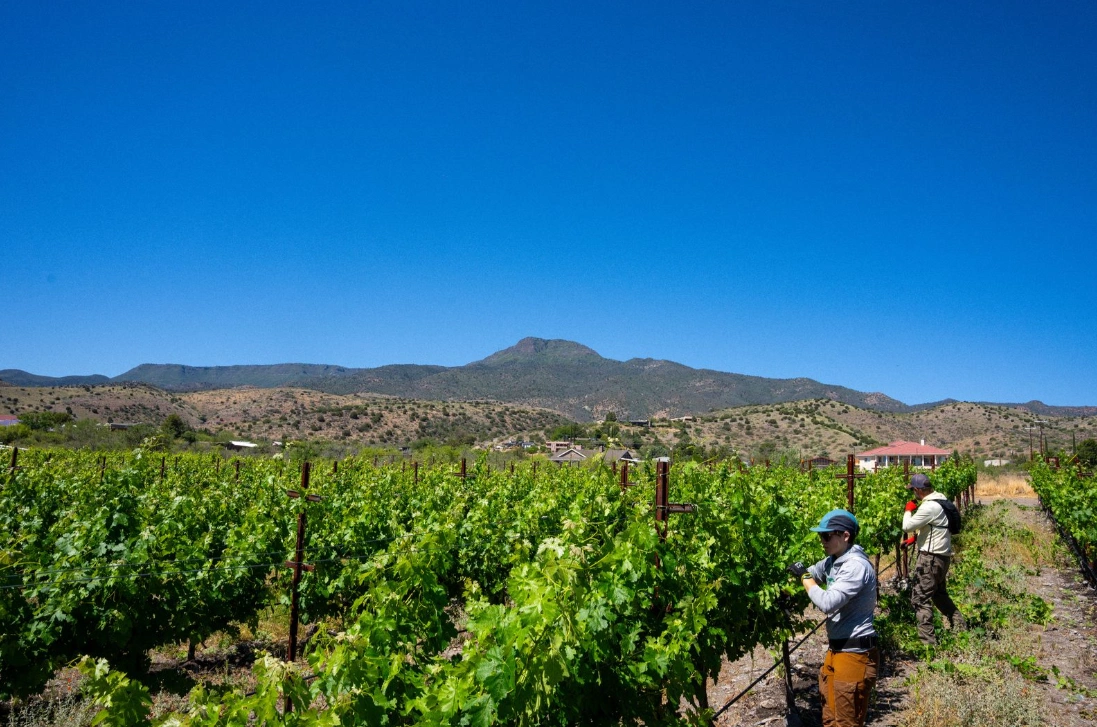
Arizona wine is produced across three federally recognized American Viticultural Areas: the Sonoita AVA, the Willcox AVA, and the Verde Valley AVA. The state’s high-elevation growing conditions, warm days, cool nights, and low humidity create a climate well-suited to a range of red and white varieties. Arizona’s wine industry has grown from a handful of producers into a nationally recognized wine region over the past two decades.
Arizona wine has a story worth knowing, and most people have not heard it yet. California, Oregon, and Washington tend to dominate that conversation. But anyone who has spent time in the Verde Valley or southern Arizona wine country knows the picture is more interesting than the general reputation suggests.
The elevation changes everything. Arizona’s wine-growing regions sit between roughly 3,500 and 5,000 feet above sea level. That altitude moderates what would otherwise be extreme desert heat, creates the warm days and cool nights that grapes need to ripen slowly, and produces wines with more natural acidity and structure than the geography might imply.
At Southwest Wine Center at Yavapai College, we sit inside this story rather than outside it. Our estate vineyard and teaching winery are in Clarkdale, Arizona, in the Verde Valley AVA. Our students grow, harvest, and make wine from vines on that property. What you taste in our tasting room came from Arizona soil and was produced by the next generation of Arizona wine professionals.
This guide covers what you need to know about Arizona wine, from the growing regions and grape varieties to the history of the industry and where to experience it in person.
Arizona’s Wine-Growing Regions: The Three AVAs
Arizona has three federally recognized American Viticultural Areas, each with distinct elevation, soil, and climate profiles that produce noticeably different wines.
An American Viticultural Area, or AVA, is a geographically defined wine-growing region approved by the Alcohol and Tobacco Tax and Trade Bureau. Designation requires evidence that the region has distinguishing features, including climate, geology, soil, and topography, that set it apart from surrounding areas.
Sonoita AVA
The Sonoita AVA in southeastern Arizona was the first federally recognized wine region in the state, designated in 1984. It sits in the high grasslands southeast of Tucson at elevations around 4,800 to 5,000 feet. The region has a semi-arid climate with a pronounced monsoon season that delivers most of its annual rainfall from July through September.
Sonoita is known for Cabernet Sauvignon, Syrah, Mourvèdre, and Malvasia Bianca. The elevation-driven temperature swings between day and night are some of the most dramatic in any Arizona growing region, and they show up in the wines as pronounced acidity and defined structure.
Willcox AVA
The Willcox AVA in southeastern Arizona received its federal designation in 2016. It sits at elevations between 4,000 and 4,500 feet in the Sulphur Springs Valley and accounts for a significant share of Arizona’s total grape production.
The region’s warm, dry summers and cool nights support a wide range of varieties, including Tempranillo, Malvasia Bianca, Grenache, Vermentino, and Viognier. Willcox has become one of the most active grape-growing areas in the state, supplying fruit to producers across Arizona.
Verde Valley AVA
The Verde Valley AVA, designated in 2021, is the youngest of Arizona’s three recognized wine regions. It sits in north-central Arizona, roughly 100 miles north of Phoenix, at elevations around 3,200 to 3,700 feet along the Verde River corridor.
The Verde Valley’s lower elevation compared to Sonoita and Willcox gives it slightly warmer growing conditions, which suit varieties like Tempranillo, Tannat, Grenache, and Barbera. The region is also close enough to Phoenix and Sedona to draw significant wine-tourism traffic year-round.
Our estate vineyard sits within the Verde Valley AVA in Clarkdale, and our students grow and harvest fruit from those vines every season.
Grape Varieties That Grow Well in Arizona
Arizona’s high-elevation, semi-arid climate favors grape varieties that can handle daytime heat, recover overnight in cooler temperatures, and withstand low annual rainfall. The varieties that perform best in Arizona tend to share a few traits: moderate-to-thick skins, good heat tolerance, and the ability to retain natural acidity even in warm conditions.
| Variety | Style | Arizona Region Where It Performs Well |
| Tempranillo | Red, medium-bodied | Verde Valley, Willcox |
| Petit Sirah | Red, full-bodied | Willcox |
| Aglianico | Red, dark fruits | Verde Valley, Willcox |
| Grenache | Red, fruit-forward | Verde Valley, Willcox |
| Cabernet Sauvignon | Red, structured | Multiple regions |
| Syrah | Red, spicy, full | Sonoita |
| Sangiovese | Red, medium-bodied | Verde Valley, Willcox |
| Malvasia Bianca | White, aromatic | Verde Valley, Willcox |
| Vermentino | White, crisp | Willcox |
| Viognier | White, aromatic | Multiple regions |
Spanish, Rhone and Italian varieties tend to adapt particularly well to Arizona growing conditions because they evolved in warm, dry Mediterranean climates that share some characteristics with the Southwest. Tempranillo, in particular, has shown consistent results across multiple Arizona AVAs.
At Southwest Wine Center, our estate vineyard grows varieties suited to the Verde Valley’s specific elevation, soil, and temperature profile. Students learn to match variety selection to site conditions as part of our AAS in Viticulture and Enology.
What Makes Arizona’s Growing Conditions Different
Arizona wine country does not look like what most people picture when they think of a vineyard. The landscape is high desert, scrub grassland, and mountain terrain rather than rolling green hills. Understanding why wine grapes grow here requires understanding what vines actually need.
Elevation and Temperature Regulation
Elevation is the defining factor in Arizona viticulture. Every 1,000 feet of gain reduces average temperature by roughly 3 to 5 degrees Fahrenheit. In a state where summer temperatures at lower elevations can reach 110 degrees or more, that differential is the difference between a grape-growing region and a region where nothing useful ripens.
At 3,500 to 5,000 feet, Arizona’s wine regions experience summer daytime highs in the 90s rather than triple digits. Nighttime temperatures drop significantly, sometimes by 30 to 40 degrees from the afternoon high. That daily temperature swing, called diurnal variation, allows grapes to ripen slowly during the day while retaining the natural acidity that gives wine structure and freshness.
The Monsoon Season
Arizona receives a significant portion of its annual rainfall during the monsoon season, which runs from late June through September. For viticulturists, this poses a management challenge: rain falls during the period when fruit is developing and ripening, and excess moisture increases the risk of fungal disease and uneven ripening.
Canopy management, row orientation, and vine training choices all factor into how well a vineyard handles monsoon conditions. Students in our viticulture program learn to read the vines through this period and adjust their management approach as the season develops.
Soil Composition in Arizona Wine Country
Arizona’s wine-growing soils vary by region but share some common traits: they tend to be well-drained, low in organic matter, and moderately alkaline. Willcox sits on deep alluvial soils with good water-holding capacity. The Verde Valley has more clay-heavy soils in some areas, which retain moisture and can affect vine vigor.
Neither soil type produces lush, vigorous vines by default, which is generally a positive outcome in viticulture. Lower-vigor vines channel more energy into the fruit rather than into excess canopy growth.
The Growth of Arizona’s Wine Industry
Arizona’s wine industry moved from a small regional curiosity to a nationally recognized wine-producing state over roughly four decades, with the most significant growth concentrated in the 2010s and 2020s.
The Sonoita AVA’s 1984 designation established Arizona as a legitimate wine region on paper. But the practical growth of producers, planted acreage, and public awareness accelerated much later. By the time the Verde Valley AVA was designated in 2021, the region had developed a meaningful concentration of producers, tasting rooms, and wine tourism infrastructure.
Arizona wines have placed in national and international competitions. The varieties that have drawn the most attention tend to be those well-matched to Arizona’s climate, particularly Spanish, Rhone and Italian varieties that perform consistently across multiple seasons.
The educational pipeline supporting the industry matters as much as the producers themselves. Southwest Wine Center at Yavapai College has been part of that infrastructure, training students who go on to work in Arizona wineries, vineyard operations, and wine businesses throughout the region. Our teaching winery gives students industry-scale production experience before they enter the workforce.
How Arizona Wine Compares to Other U.S. Wine Regions
Arizona wine occupies a distinct position among American wine regions. The comparison that comes up most often is California, which dominates U.S. wine production in volume and name recognition. The comparison is not particularly useful for understanding what Arizona wine actually is.
| Factor | Arizona | Pacific Northwest | California Coast |
| Primary elevation | 3,500–5,000 ft | 200–1,500 ft | Sea level to 2,500 ft |
| Annual rainfall | 12–18 inches (monsoon-driven) | 20–60 inches | 15–35 inches |
| Diurnal variation | High (25–40°F swing) | Moderate | Moderate to low |
| Dominant red styles | Spanish, Rhone varieties | Pinot Noir, Cabernet, Merlot | Cabernet, Chardonnay, Zinfandel |
| Industry scale | Growing regional | Established national | Dominant national |
A more useful comparison for Arizona may be regions like Spain’s Castilla y León or southern France’s Languedoc, where hot, dry growing conditions and significant elevation contribute to wines with structure and acidity rather than the soft, fruit-forward profile associated with warm, low-elevation growing areas.
Arizona wines at their best show a combination of ripe fruit character from the heat and firm acidity from the elevation-driven cool nights. That profile is distinctive, and it becomes more consistent as the industry matures and growers accumulate more seasons of site-specific data.
Where to Taste Arizona Wine in the Verde Valley
The Verde Valley has become one of the more accessible Arizona wine destinations for visitors coming from Phoenix, Sedona, or Flagstaff. The concentration of producers and tasting rooms in the Clarkdale, Cottonwood, and Jerome area makes a tasting itinerary practical within a single day.
Our tasting room at Southwest Wine Center is open Thursday through Sunday, 12 to 6 PM, at 601 Black Hills Drive in Clarkdale. The tasting room pours student-crafted wines from our estate vineyard. Guests can taste current releases, ask questions about the wine-making process and the vineyard, and purchase bottles to take home. The patio is dog-friendly.
The wines poured at our tasting room are not distributed nationally and are not available at grocery stores. What is on the flight during any given visit reflects the current season’s production, which means availability changes. Some of our limited releases sell out before the next vintage is ready.
Our wine club gives members early and priority access to student-crafted releases, a 20% member discount, and a closer connection to the students and program behind the wine. For anyone who follows Arizona wine closely and does not want to hear about a vintage after it is already gone, the wine club is the practical answer.
How to Study Arizona Wine and Viticulture
Arizona’s wine industry needs trained people at every level: in the vineyard, in the winery, in tasting rooms, in wine retail, and in the business side of wine production and distribution. That demand has not consistently been met by the available educational pipeline.
Southwest Wine Center at Yavapai College is the only program in Arizona offering hands-on viticulture and enology education on a working estate vineyard. Students learn to grow grapes and make wine in the same environment where Arizona wine is actually produced, not in a simulation or a classroom removed from the industry.
Degree and certificate options are available at different levels of commitment:
- The AAS in Viticulture and Enology is a two-year associate degree covering both disciplines in full, with hands-on vineyard and winery experience built into every semester.
- The Viticulture Fundamentals Certificate covers the core science and practices of grape growing for students who want to start with that side of the field.
- The Advanced Viticulture Certificate builds on the fundamentals with more applied vineyard management coursework.
- The Enology Certificate focuses on the winery side: fermentation science, sensory evaluation, winery operations, and wine chemistry.
Scholarship opportunities are available for students. For anyone considering the program, the Path to Success page outlines what a student’s experience looks like from enrollment through completion.
The Bottom Line on Arizona Wine
Arizona wine stands on its own terms. The state has growing conditions, grape varieties, and a regional identity that stand on their own.
The Verde Valley, in particular, has moved from a region most wine drinkers had never heard of to one with a clear identity, a recognized AVA, and an educational program producing the next generation of people who will grow and make Arizona wine over the next several decades.
At Southwest Wine Center at Yavapai College, we are part of that story from the inside. Our students grow the grapes, make the wine, pour the flights, and go on to work throughout the Arizona wine industry. The tasting room in Clarkdale is where the public can meet those who work in person.
If you want to taste what Arizona wine looks like at the estate level, we are open Thursday through Sunday, 12 to 6 PM. Visit Our Tasting Room or Explore Our Wine Club
Frequently Asked Questions About Arizona Wine
1. Is Arizona a legitimate wine-producing state?
Yes. Arizona has three federally recognized American Viticultural Areas: the Sonoita/Elgin AVA (designated in 1984), the Willcox AVA (designated in 2016), and the Verde Valley AVA (designated in 2021). Arizona wines have placed in national and international competitions, and the industry has grown significantly in producers, planted acreage, and wine tourism infrastructure over the past two decades.
2. What wine is Arizona known for?
Arizona has developed a reputation for Spanish and Rhone varieties that suit its warm, high-elevation growing conditions. Tempranillo, Petit Sirah, Grenache, Syrah, and Cabernet Sauvignon are among the most consistently successful red varieties. For whites, Malvasia Bianca, Vermentino, and Viognier have drawn attention across multiple Arizona regions.
3. Where is the best wine in Arizona?
Arizona has three distinct wine regions, each producing wines with a different character. The Sonoita/Elgin AVA in southeastern Arizona is the oldest recognized region. The Willcox AVA accounts for a significant share of the state’s grape production. The Verde Valley AVA in north-central Arizona is the newest designation and is home to Southwest Wine Center’s estate vineyard and teaching winery in Clarkdale.
4. How does Arizona wine compare to California wine?
The comparison is less useful than it might seem because the two regions produce wine under significantly different conditions. Arizona’s high-elevation growing areas have much stronger diurnal temperature variation than most California coastal regions, which tends to produce wines with more natural acidity and structure that are more energetic than heavy. The variety mix also differs: Arizona leans toward Spanish, Rhone and Italian varieties rather than the Cabernet Sauvignon and Chardonnay that dominate California’s commercial output.
5. When is the best time to visit Arizona wine country?
The Verde Valley is accessible year-round, but spring and fall offer the most comfortable conditions for visiting. Fall is particularly interesting for wine visitors because harvest runs from late August through October, and some tasting rooms offer harvest-season events or barrel tastings. Summer visits are possible given the elevation, though July and August bring the monsoon season.
6. What makes Arizona wine unique?
Arizona wine is shaped by conditions that do not exist in most other U.S. wine regions: high elevation, strong diurnal variation, monsoon-driven rainfall patterns, and desert soils low in organic matter. The combination produces wines that can carry ripe fruit character from the daytime heat alongside real acidity from the cool nights. That balance, when the season cooperates, is what distinguishes Arizona wine from warmer, lower-elevation regions.
7. Can I learn winemaking in Arizona?
Yes. Southwest Wine Center at Yavapai College offers the only hands-on viticulture and enology education program in Arizona based on a working estate vineyard. Degree and certificate programs are available for students at different stages, from a two-year AAS to focused certificates in viticulture fundamentals, advanced viticulture, and enology.
8. How do I get access to limited Arizona wine releases?
Wine produced in small quantities by estate programs and teaching wineries often sells out before it reaches general distribution. Southwest Wine Center’s wine club gives members early access to student-crafted releases from our estate vineyard, along with a 20% member discount. For anyone following the Verde Valley wine scene closely, membership is the most direct way to stay ahead of availability.