Your Pathway to Success
Hands-On Enology Experience
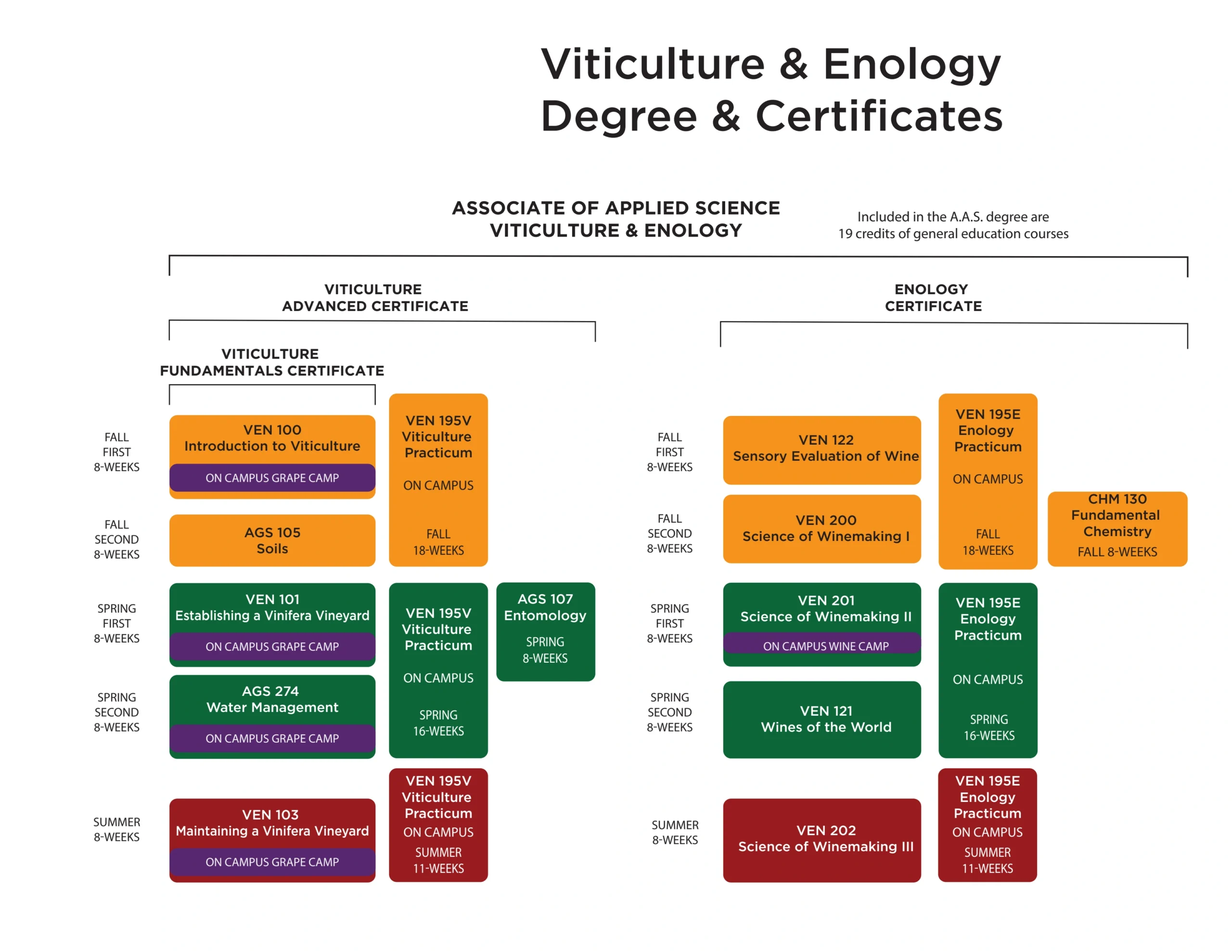
Students who enroll in the Enology Practicum course, VEN 195E, make wine on an industry scale under the supervision of the Yavapai College instructors. The winemaking tasks which take place at the SWC follow the same seasonal schedule as the local wineries. The life-cycle of our wines begins at grape harvest in the late summer/early fall. Students follow the production of the wine through processing, fermentation, racking, lab analysis, blending, fining, filtration, and bottling. Once the final product is labeled with student photographs and tasting notes it will be made available for sale in the SWC Tasting Room.
Learning Objectives:
COURSE CONTENT: 1. Cellar operations including sanitation, racking, filtration and bottling 2. Winery sanitation procedures 3. Processing incoming grapes for winemaking 4. Equipment setup of the destemmer, crusher and press 5. Pump and hose layout for safe transfer of juice and wine 6. Wine lab analysis 7. Standardization of solutions and verification of the accuracy in lab analysis 8. Barrel topping, steaming and maintenance 9. Operation of bottling equipment (sparger, filler, corker, capsule spinner, etc.) 10. Laboratory fining and stabilization trials 11. Calculation of juice, must and wine additions 12. Inoculation and fermentation monitoring 13. Filtration integrity testing 14. Maintaining the order and appearance of the wine cellar 15. Accurate and compliant cellar and bottling records 16. Wine blending and blind sensory evaluation trials LEARNING OUTCOMES: 1. Safely set up grape processing equipment. (3-5, 14) 2. Perform the racking and transfer of juice/wines in accordance with the standard operating procedures. (1, 5) 3. Clarify and stabilize production wines. (1, 6, 10, 11) 4. Perform cleaning and sanitation of cellar and bottling equipment. (1, 2, 8, 9, 13, 14) 5. Assess the chemical composition of a wine through laboratory analysis. (6, 7, 10, 11) 6. Inoculate juice or must for fermentation. (11, 12) 7. Manage fermentation temperatures and punch downs on red grapes. (12) 8. Facilitate proper record keeping and bottling reporting. (15) 9. Participate in blending and sensory evaluation trials of production wines. (16) 10. Prepare wine for bottling. (1, 6, 8-10, 13)
Learning Objectives:
COURSE CONTENT: 1. Cellar operations including sanitation, racking, filtration and bottling 2. Winery sanitation procedures 3. Processing incoming grapes for winemaking 4. Equipment setup of the destemmer, crusher and press 5. Pump and hose layout for safe transfer of juice and wine 6. Wine lab analysis 7. Standardization of solutions and verification of the accuracy in lab analysis 8. Barrel topping, steaming and maintenance 9. Operation of bottling equipment (sparger, filler, corker, capsule spinner, etc.) 10. Laboratory fining and stabilization trials 11. Calculation of juice, must and wine additions 12. Inoculation and fermentation monitoring 13. Filtration integrity testing 14. Maintaining the order and appearance of the wine cellar 15. Accurate and compliant cellar and bottling records 16. Wine blending and blind sensory evaluation trials LEARNING OUTCOMES: 1. Safely set up grape processing equipment. (3-5, 14) 2. Perform the racking and transfer of juice/wines in accordance with the standard operating procedures. (1, 5) 3. Clarify and stabilize production wines. (1, 6, 10, 11) 4. Perform cleaning and sanitation of cellar and bottling equipment. (1, 2, 8, 9, 13, 14) 5. Assess the chemical composition of a wine through laboratory analysis. (6, 7, 10, 11) 6. Inoculate juice or must for fermentation. (11, 12) 7. Manage fermentation temperatures and punch downs on red grapes. (12) 8. Facilitate proper record keeping and bottling reporting. (15) 9. Participate in blending and sensory evaluation trials of production wines. (16) 10. Prepare wine for bottling. (1, 6, 8-10, 13)
Learning Objectives:
COURSE CONTENT: 1. Quality Assurance 2. Canopy Management 3. Trellis Systems 4. Harvest Operations 5. Diseases and Pests 6. Lab Analysis 7. Crop Estimates 8. Fertility Plan 9. Petiole Analysis 10. The U or Lyre System LEARNING OUTCOMES: 1. Assess and maintain crop health. (1-3,8,9) 2. List and describe the characteristics of canopy ideotype. (2,10) 3. Describe and collect fruit samples for harvest parameters. (4) 4. Collect and perform lab analysis. (6) 5. Predict and plot harvest date and crop estimate. (7) 6. Plan and manage proper post-harvest monitoring. (7,8) 7. Manage proper pre-harvest operations. (7,8) 8. Identify major insect and weed pests in a given location. (5) 9. Identify and describe major fungal diseases in a given location. (5) 10. Evaluate existing management strategies for identified pests and diseases. (5) 11. Apply spray schedule to accomplish the goals of a stated pest management program. (5) 12. Discuss the water management strategy at your vineyard site. (1,8) 13. Identify and preform proper suckering and shoot thinning techniques. (1-3,9) 14. Apply proper cluster thinning, shoot positioning and leaf removal techniques. (1-3,9,10)
Learning Objectives:
COURSE CONTENT: 1. Quality Assurance 2. Canopy Management 3. Trellis Systems 4. Harvest Operations 5. Diseases and Pests 6. Lab Analysis 7. Crop Estimates 8. Fertility Plan 9. Petiole Analysis 10. The U or Lyre System LEARNING OUTCOMES: 1. Assess and maintain crop health. (1-3,8,9) 2. List and describe the characteristics of canopy ideotype. (2,10) 3. Describe and collect fruit samples for harvest parameters. (4) 4. Collect and perform lab analysis. (6) 5. Predict and plot harvest date and crop estimate. (7) 6. Plan and manage proper post-harvest monitoring. (7,8) 7. Manage proper pre-harvest operations. (7,8) 8. Identify major insect and weed pests in a given location. (5) 9. Identify and describe major fungal diseases in a given location. (5) 10. Evaluate existing management strategies for identified pests and diseases. (5) 11. Apply spray schedule to accomplish the goals of a stated pest management program. (5) 12. Discuss the water management strategy at your vineyard site. (1,8) 13. Identify and preform proper suckering and shoot thinning techniques. (1-3,9) 14. Apply proper cluster thinning, shoot positioning and leaf removal techniques. (1-3,9,10)