
What Is Viticulture?
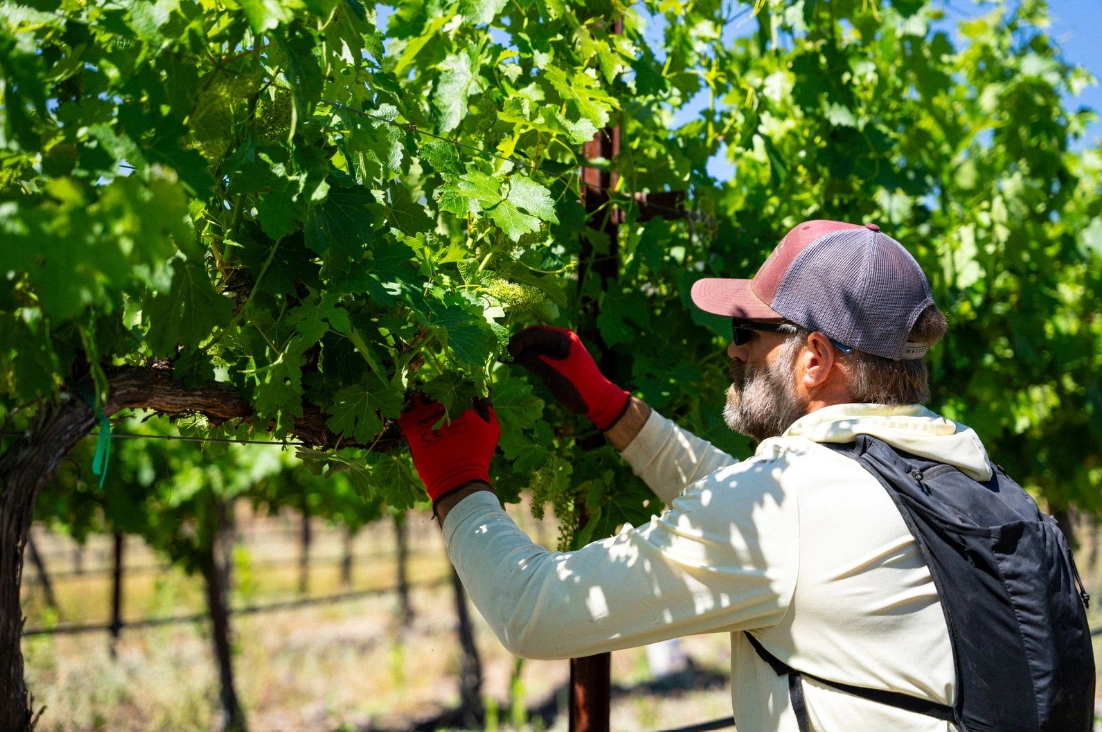
Viticulture is the science and practice of growing grapes. It covers everything that happens in the vineyard before the grapes ever reach a winery, including site selection, vine training, soil management, canopy work, pest and disease control, and harvest timing. Viticulture is one of the two disciplines in the field of viticulture and enology, with enology covering the winemaking side.
If you are curious about wine, the grape-growing side of the process is worth understanding. Most of what ends up in a bottle starts with decisions made in the vineyard, months before fermentation begins.
Viticulture is the field that covers all of those decisions. At Southwest Wine Center at Yavapai College, our students study viticulture on a working estate vineyard in Clarkdale, Arizona. They do not just read about vine management in a classroom. They prune, monitor, irrigate, and harvest on real vines, in real Arizona growing conditions.
This article explains what viticulture is, what the work actually involves, and how it connects to the wine in your glass.
What Is Viticulture?
Viticulture is the branch of horticulture focused on grape cultivation, specifically grapes grown for wine production. It draws from agronomy, plant science, soil science, and climate science to help growers make informed decisions at every stage of the growing season.
A viticulturist manages the full life cycle of the vine, from planting and establishment through pruning and training, irrigation and nutrition, pest and disease control, canopy management, and ultimately the harvest decision. Each of these stages directly affects the quality, character, and yield of the fruit.
The word comes from the Latin “vitis,” meaning vine, and “cultura,” meaning cultivation. In practice, it covers both the science behind how vines grow and the applied skills needed to manage them through variable seasons and growing conditions.
What Viticulturists Actually Do, Season by Season
Viticulture is not one set of tasks. It follows the natural rhythm of the vine across the calendar year, and each season brings a different set of priorities.
| Season | Key Viticulture Work |
| Winter | Dormant pruning, trellising repair, soil amendments |
| Spring | Bud break monitoring, shoot thinning, bloom monitoring |
| Summer | Canopy management, irrigation scheduling, pest and disease scouting |
| Fall | Harvest assessment, picking, post-harvest vine care |
Pruning and Vine Training
Pruning happens during dormancy, typically from January through March in Arizona. Viticulturists decide how many buds to leave on each vine, which directly controls the size of the coming season’s crop.
Vine training refers to the physical structure used to support the vine, called a trellis system. Different systems work better in different climates, varieties, and vineyard layouts. Our students learn to identify and manage multiple training systems on our estate vineyard in the Verde Valley.
Canopy Management
Canopy management includes summer work such as positioning shoots, removing excess leaves, and thinning clusters to improve airflow and sun exposure. In a warm climate like Arizona’s, good canopy management protects fruit from sunburn while maintaining the color and flavor development the winemaker is counting on.
The Harvest Decision
Harvest timing is one of the most consequential calls a viticulturist makes each season. Students in our program learn to read Brix levels for sugar concentration, measure pH and titratable acidity, taste through vineyard blocks, and assess seed and skin ripeness before committing to a pick date.
Pick too early, and the wine will be sharp, thin, and underdeveloped. Pick too late, and the sugar climbs fast while the acidity drops, producing flat, heavy wine. Our students work through this decision on our estate vines every fall, with real fruit and real consequences.
How Viticulture Connects to Enology
Viticulture covers the vineyard. Enology covers the winery. Together, they form the two-discipline foundation of the wine industry.
Viticulture and enology are taught together because they are interdependent. A winemaker who does not understand what happened in the vineyard is working without critical information. A viticulturist who does not understand fermentation, chemistry, and sensory evaluation cannot fully optimize vineyard production.
At Southwest Wine Center, our AAS in Viticulture and Enology teaches both disciplines side by side. Students who work in the vineyard during the season also work in our teaching winery once the fruit comes in. The connection between the two sides is something they see firsthand, not just in theory.
What Climate and Site Conditions Matter in Viticulture
The quality and character of a wine grape are shaped by where and how it was grown. Viticulturists assess climate, soil, topography, and water availability before a vine ever goes in the ground.
Climate Factors
Grapes need a long, warm growing season with enough heat to ripen the fruit and cool nights to preserve natural acidity. The most widely used climate measurement in viticulture is Growing Degree Days (GDD), which tracks accumulated heat units above 50°F through the growing season.
Arizona’s Verde Valley sits at an elevation of roughly 3,500 feet. The combination of warm days and cool nights at that altitude slows ripening, building acidity, and giving grape varieties more time to develop flavor. Our estate vineyard in the Verde Valley AVA reflects exactly those conditions.
Soil
Vines do not need rich soil. They actually perform better in well-drained, lower-fertility soils that force the vine to work harder and put more energy into the fruit rather than into canopy growth. Soil type also influences the mineral character of the finished wine, though the science of exactly how that transfer works is still an active area of research.
Topography
Slope, aspect, and elevation affect temperature, frost risk, drainage, and sun exposure. South-facing slopes in the Northern Hemisphere receive more direct sun. Higher elevations bring cooler temperatures and stronger UV radiation, which affects skin thickness and color development in the grape.
Why Viticulture Matters to the Wine in Your Glass
Every winemaker starts with the fruit the vineyard provides. A winemaker cannot create flavor compounds that did not develop in the grape. They can manage, preserve, or lose what the vineyard built, but they cannot replace it.
This is why wine professionals say great wine starts in the vineyard. What you taste in the glass, the acidity, the fruit character, the texture, the alcohol level, all of it traces back to decisions made on the vine months earlier.
When you visit our tasting room in Clarkdale, the student-crafted wines you taste come from fruit grown on our own estate vines. The students who poured your flight had a direct hand in growing and harvesting that fruit.
Study Viticulture at Southwest Wine Center
Understanding viticulture in theory is a starting point. Working through it on a real vineyard is where the skill actually develops.
At Southwest Wine Center at Yavapai College, students study viticulture on our estate vineyard in Clarkdale, Arizona, through every stage of the growing season. The program includes hands-on vine management, harvest work, lab science, sensory evaluation, and winery operations.
If you are interested in a career in the wine industry or in deepening your understanding of the craft, our degree and certificate programs in viticulture and enology are designed for students who want real experience, not just coursework.
For those who want to start with the basics, our Viticulture Fundamentals Certificate covers the core science and practical skills of grape growing. For more advanced study, the Advanced Viticulture Certificate builds on that foundation with deeper vineyard management and applied coursework.
Learn about our scholarship opportunities if you are considering enrolling.
Frequently Asked Questions About Viticulture
1. What is viticulture in simple words?
Viticulture is grape growing for wine. It covers everything that happens in the vineyard before the grapes reach a winery, including planting, pruning, irrigation, canopy management, pest control, and deciding when to harvest. The goal is to produce healthy, high-quality fruit that gives the winemaker the best possible starting point.
2. What is the difference between viniculture and viticulture?
Viticulture refers specifically to growing grapes. Viniculture is a broader term that encompasses all aspects of wine production, including both grape growing and winemaking. In practice, the wine industry uses viticulture and enology as the standard two-discipline framework, with viticulture covering the vineyard and enology covering the winery.
3. What climate is best for viticulture?
Wine grapes grow best in climates with warm, dry summers, mild winters, and a long enough growing season to fully ripen the fruit. The traditional “wine belt” sits between 30 and 50 degrees latitude in both hemispheres. Within that range, elevation, proximity to water, and local topography create significant variation. Arizona’s Verde Valley, at roughly 3,500 feet, offers warm days, cool nights, and low humidity, conditions that work well for a range of red and white varieties.
4. What makes a good wine?
A good wine starts with good fruit. That means grapes that were grown in a site that suits the variety, managed carefully through the season, and harvested at the right time. After harvest, the winemaker’s job is to make decisions that preserve and build on what the vineyard produced. Quality in the glass depends on both sides of the process, viticulture and enology, working well together.
5. What are the two main types of wine?
The two main categories are red wine and white wine. Red wine is fermented with the grape skins present, which contribute color, tannin, and many flavor compounds. White wine is made from juice separated from the skins before or shortly after crushing, producing a lighter, fresher style. Rosé, sparkling, and fortified wines are additional categories, each made through specific variations on the base process.